
Stop Being Their Punching Bag: 5 Keys to Staying Calm When Conflict Hits
TLDR: You are not a punching bag or an outlet for someone else's frustration. When someone is rude or condescending, it triggers a natural "fight or flight" reaction in your body. You can protect your peace and stay in control of your emotions by taking a deep breath to pause and regulate yourself first. Then, mentally remind yourself that their behavior does not actually threaten you, and respond by asking a calm question about their intent—like, "Did you mean for that to be rude?"—to reflect their bad behavior right back to them.
COMMUNICATION TIPS
Robert Woldhuis
5/5/20265 min read
We’ve all been there. You’re doing the hard work, navigating the minefield of early sobriety, and trying to keep your head held high. Then—bam. A family member hits you with a snarky comment about your past, or a stranger is unnecessarily rude while you’re just trying to get through your day. In an instant, that peace you’ve been fighting for evaporates. Your chest gets hot, your heart races, and you’re one sharp retort away from a blow-up.
For those of us in recovery, these moments are more than just "annoying." They are high-stakes. Unmanaged conflict is a primary relapse trigger; if we can’t handle the heat of a disagreement, we risk losing our emotional sobriety—and eventually, our physical sobriety. But there is one simple realization that can change everything: You are not a target. When you stop seeing yourself as a bullseye for other people’s negativity, you stop reacting from a place of fear and start acting from a place of power.
2. Conflict is Biological, Not Personal
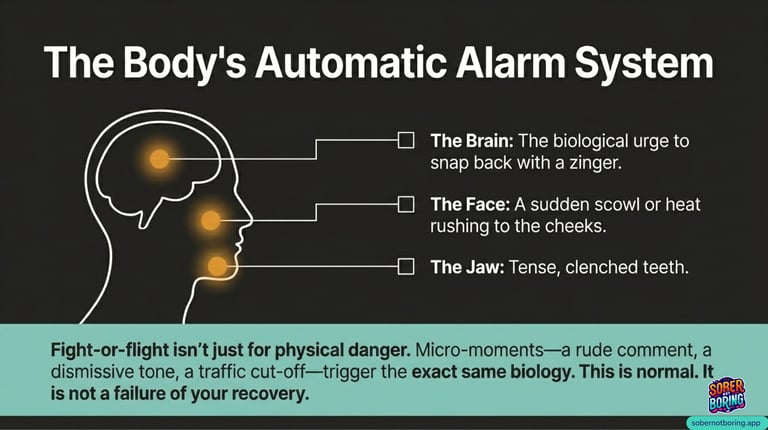
When someone snaps at us, our bodies react before our minds even get a vote. This is biology, not a character flaw. You don’t need to be in a physical fight for your body to scream "threat!" It happens in micro-moments: your jaw gets tense, your neck gets hot, and a scowl settles on your face.
Understanding that this is a biological reflex is a game-changer for us. You aren’t "weak" or "crazy" for feeling triggered; your brain is just trying to protect you. By recognizing these signs—the heat, the tension, the scowl—you can label the reaction for what it is: a natural human reflex. This awareness keeps you from spiraling into the "fight" mode that used to lead us back to old, destructive habits.
1. You Are Not a Punching Bag
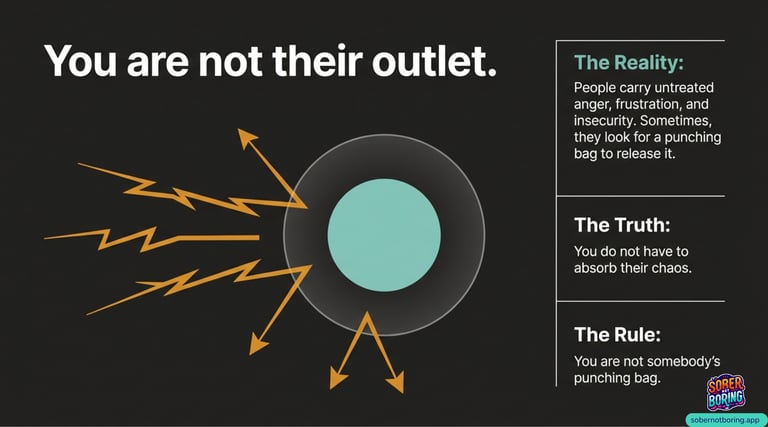
The foundation of protecting your peace is recognizing that you are not the designated outlet for someone else’s lifelong frustrations. Many people carry years of built-up anger, insecurities, and unaddressed trauma. Often, they look for the nearest person to dump it on.
In our journey, we have to learn to refuse "delivery" of that baggage. You are a human being, not a destination for someone else's misery. Refusing to be a punching bag isn’t about being aggressive; it’s a quiet, internal boundary that says, "That belongs to you, not me."
"You are not a target. You are not somebody's punching bag. You are not somebody's outlet for all of their frustration and their anger and their insecurities that have been built up all their life."
3. Your First Word is a Breath
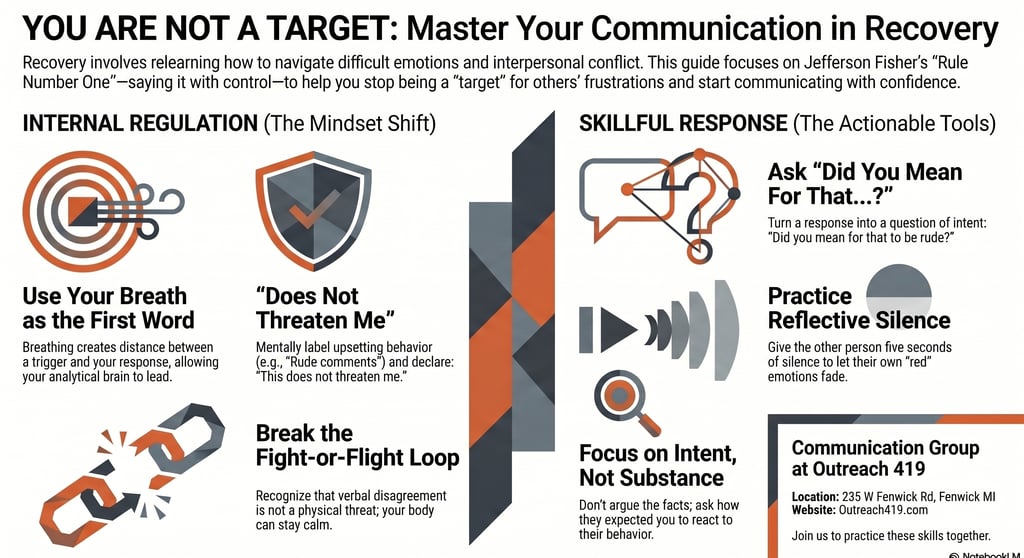
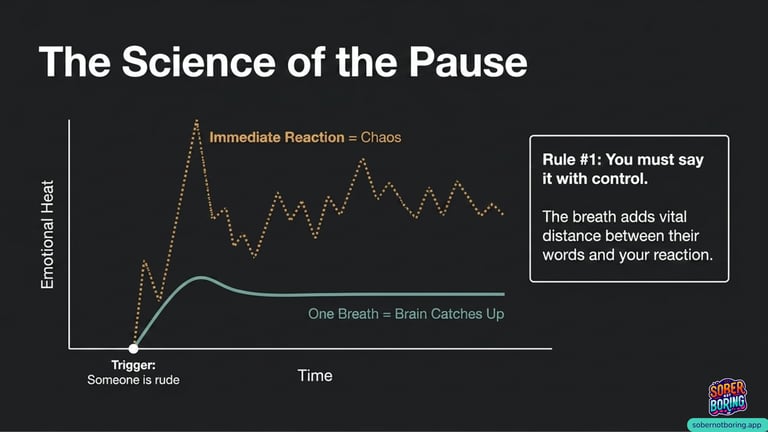
To bridge the gap between a biological trigger and a sober response, we use Rule Number One: Say it with control. When conflict hits, the most powerful tool in your kit is the pause.
Instead of jumping straight into a rebuttal or a "zinger," make your very first "word" a deep, intentional breath. This breath is a superpower because:
It creates distance: It puts space between the rude comment and your reaction.
It engages the "analytical brain": That small window of time allows your logical mind to take over from the impulsive, reactive centers that often get us into trouble.
In high-stress situations, this "distance" is what keeps us from saying something we’ll regret—or worse, using that stress as an excuse to pick up a drink or a drug.
4. The "Does Not Threaten Me" Mantra
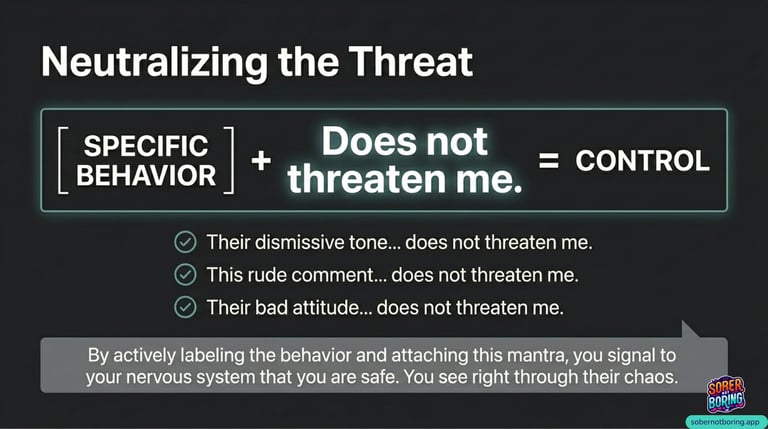
A powerful way to stay calm is to mentally reframe the behavior you’re facing. I want you to try a tactile "life hack" right now. Think of a behavior that usually sets you off—maybe it’s someone being dismissive, condescending, or rude.
Write that behavior down on a piece of paper. Right next to it, write: "Does not threaten me."
Dismissiveness does not threaten me.
Back talk does not threaten me.
Insults do not threaten me.
Think of it like a massive lion or an elephant encountering a tiny, yapping dog. The lion doesn't get angry or scared; it just looks down and thinks, What is this? The lion isn't threatened because it knows its own strength. When you decide that a rude person is non-threatening, you keep your power. You see right through the behavior to the insecurity beneath it.
Conclusion: Choosing Your Remote Control
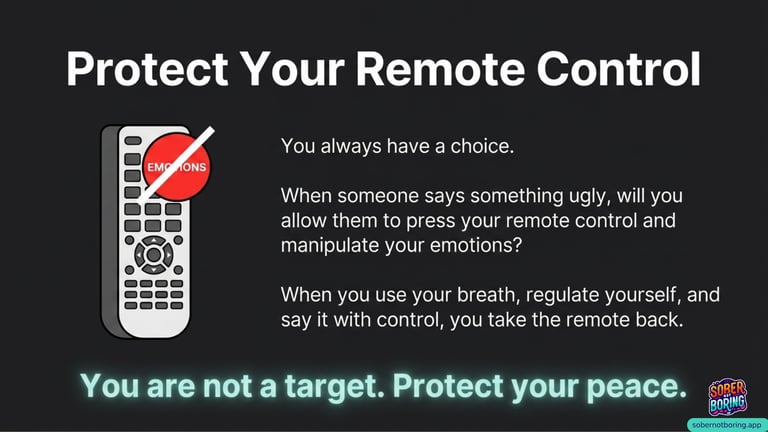
Ultimately, every interaction is a choice. When someone is ugly or condescending, you can either hand them the "remote control" to your emotions and let them channel-surf through your mood, or you can keep it for yourself.
Will you allow a stressed-out relative or a grumpy stranger to dictate your sobriety today? Or will you use your breath, regulate your body, and remember that you are not a target?
Who gets to hold the remote control to your emotions today?
5. Flip the Script with Questions of Intent
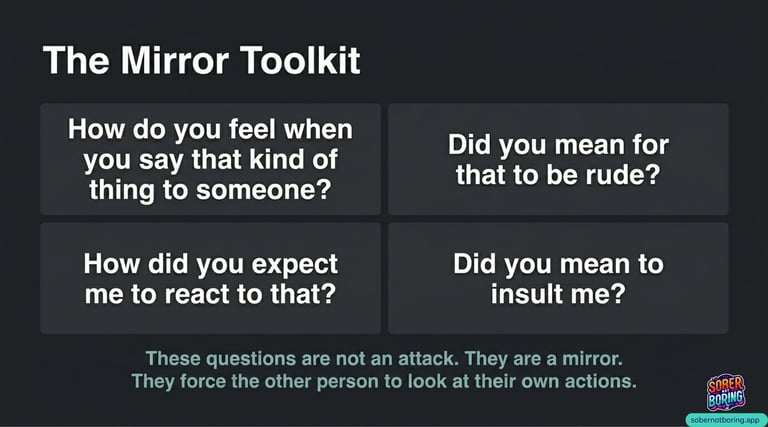
When someone attacks, our old instinct was to spit back. Instead, we’re going to ask a reflection question. This shifts the focus from your supposed "mistake" to their actual behavior.
Think about a time communication expert Jefferson Fisher was at the San Diego airport. He accidentally walked through a "no return" exit and realized he’d have to go through TSA all over again. A TSA agent, looking smug, said, "That’s why you should read the signs, sir. You have no one to blame but yourself."
Instead of snapping back, Jefferson paused, looked at her, and asked: "How do you feel when you say that kind of thing to someone? Does it give you joy?"
The result? The agent immediately turned red. The "red left her system" as she realized how she was acting. She apologized and immediately shifted into "helping mode," showing him where to go. By asking a question of intent—like "Did you mean for that to be rude?"—you force the other person to look in the mirror.
"These ways of responding to rude behavior... it is a reflection of their own behavior and character."
Want more tools for your recovery journey?
Download the Sober Not Boring App for more peer-level resources, daily encouragement, and a community that understands exactly what you’re going through. Let's keep growing together.